
The second world war is the most devastating and blooby war in all history.
THE CAUSES
- Differences betwen Religion
- Expand territory
- Ethnic problems
- Treaty of Versailles
A. Axis power
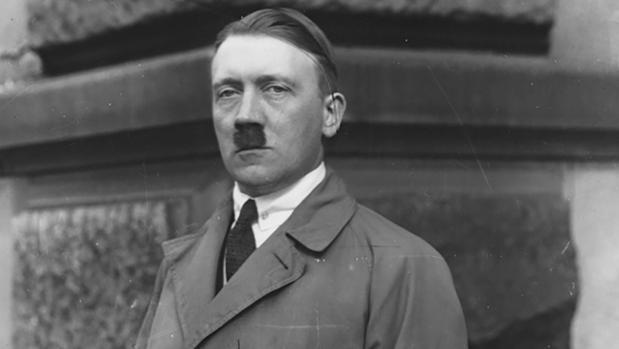
It elevates the Nazism, the Fascism and the Racism that Benito Mussolini preached to global planes and established them as the ideological base of its policy.
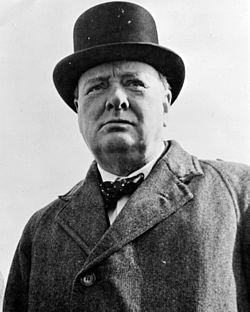

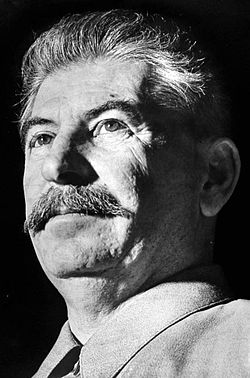
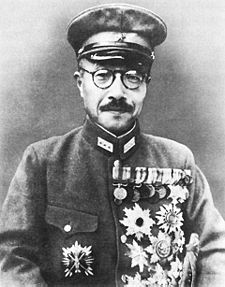
HOLOCAUSTO
The holocaust is a mass slaughter of human beings. Its use is linked to the genocide of some six million Jews during the Second World War carried out by the Nazi regime in Germany.
«The Holocaust was systematic persecution and murder, bureaucratic and state-sponsored, of approximately six millions of Jews by the Nazi regime and its collaborators.
‘Holocaust’ is a word of Greek origin meaning ‘sacrifice by fire. ‘ The Nazis, who came to power in Germany in January 1933, they believed that the Germans were ‘racially superiors ‘and that the Jews were considered’ life that does not deserve lifetime’. During the Holocaust, the Nazis also targeted others groups due to their perceived ‘racial inferiority’: Roma / Sinti (Gypsies), the disabled, and some of the Slavic peoples (Poles, Russians and others). Hitler was not just chasing Jews, communists, Socialists, Jehovah’s Witnesses and homosexuals were also were persecuted groups by political and behavioral reasons.
Battles
Invasion of Poland
It was the invasion of Poland in 1939, by the Germans from the west and the Soviets from the east, the aggression that made Britain and France declare war on Germany and start the conflict. The Polish troops, poorly prepared and with an outdated weaponry (loaded on horseback against enemy tanks) had no choice and the conquest of the country was made in just a few weeks.

Bombing of London
Dubbed ‘Operation Sea Lion’, the British islands were one of Hitler’s first targets. Knowing of the superiority of the British Navy, the German dictator focused his efforts on harming the civilian population and destroying British resources by constant bombing with the Luftwaffe. During this period, the German aviation and the RAF staged some of the most impressive air clashes in the conflict. The stubborn conviction of resistance of Winston Churchill and the voice of Edward R. Murrow through the BBC were important moral supports for the population to endure.

Battle of El Alamein One of the most important clashes that took place in North Africa. Divided into two parts, the Afrika Korps led by ‘the desert fox’ clashed with British troops of General Montgomery. After months of confrontation, the advance of the Axis troops stopped and they lost the opportunity to reach their objective, the taking of Egypt.

Dunkirk Rescue
The small city of the French north coast became the scene of one of the most impressive rescues of the Second World War. Before the advance of the German troops, the British soldiers who were supporting France in the battlefield began to retreat to be able to retire to the islands. The strong presence of the German Luftwaffe and the shortage of transport ships put this process at risk. Finally, thanks to the help of civilian ships, more than 350,000 soldiers were saved.

Resistance and partisans
As the German and Italian regimes gained strength and extended their rule, dissidents arose in the occupied territories that opposed their rule. From France, Italy, Poland or Greece, and practically in all the occupied countries, groups of armed rebels dedicated themselves to sabotage from within the enemy, waiting for an opportunity to face it. The popular Italian song ‘Oh bella ciao’ became a symbol of this struggle and perfectly reflects the thoughts of the partisans.

Bombing Pearl Harbor
Undoubtedly, a key fact in the development of the Second World War. The Japanese aviation’s surprise attack on the Pearl Harbor naval base in Hawaii radically changed American public opinion and caused President Roosevelt to finally enter the war in 1941. The US intervention, which until then had been limited to sending supplies to Great Britain, opened a new front in western Europe that hindered German and Italian action and accelerated the end of the war.

Battle of Stalingrad
Considered by many historians as the key battle of the Second World War in which the defeat of Hitler began to be chewed. It began in August 1942 and lasted for six months in which some 2 million people lost their lives between both sides. The harsh climatic conditions and the strong resistance of the Soviet defenders caused that the German troops, practically undefeated until then, retired. It is one of the bloodiest battles in history.

Battle of Kursk
It took place in 1943 and was known as ‘Operation Citadel’, it was a last desperate attempt by the Germans to recover their advances on the eastern front. They gathered their most prestigious generals and their most advanced weapons and launched their tanks against the Soviet forces. It is considered to be the biggest tank battle in history, with around three million armored vehicles participating. The Soviets crushed the German forces that could not do anything but continue to retreat.

Normandy’s landing
The mythical Day D. The disembarkation of North American troops in the coasts of Normandy that is considered one of the great victories of the allies and the beginning of the end of the Nazi regime. Fooling the German spies to defend other positions, the US Army conducted an amphibious operation that had never been seen before and locked up Hitler between his troops from France, those entering through southern Italy and the Soviets they were dangerously approaching Berlin

Battle of the Ardennes
In December of 1944, the German troops advanced through this Belgian region characterized by its dense forests to attack by surprise the American troops. In spite of the secrecy with which it was planned and the resources used by the Germans, the American troops managed to stop the enemy advance and, later, make it retreat. During this battle, the participation of General Patton, under the command of the 3rd Army, stands out.

Battle of Iwo Jima
Key battle of the Pacific War in which the United States confronted the Japanese army for control of the Iwo Jima and Okinawa Islands. It began in February 1945, months before the German defeat, and the triumph of the United States allowed them to take control of the airstrips of the islands, from where they would direct the aerial attacks and bombings to the Japanese islands. After the confrontation took the famous photograph of the Marines raising a flagpole with the American flag, one of the most recognizable in history.

Shot of Berlin
In April 1945, the German armies announced their surrender to the Allies. But before then, Hitler had ordered to defend the German capital until the last breath. Locked in his bunker and with the idea of suicide in mind, the German leader was surrounded by Soviet troops entering a city defended by the Hitler Youth, inexperienced youth who could do little against the fearsome Soviet battalions.

Development of the Second World War
On September 1, 1939, World War II began thanks to the invasion of Poland by the German troops led by Adolf Hitler. The United Kingdom and France immediately declare war on Germany, however, nothing can be done to prevent the dismemberment and fall of Poland attacked on two fronts by Germany and the USSR.
Then begins a period dominated by uncertainty and the shortage of armed confrontations and battles, was called War «Broma.» After a few months of indecision on the part of the allies, Germany signed the non-aggression pact Ribbentrop-Molotov with the USSR and began the offensive of the Axis powers.

This is a short video with the most important facts of this war.
CONLUSION
When the Second World War ended, the world took a completely different path, economically, socially, politically and others.
It brought other wars and caused several countries to change in many ways.
After the Second World War the world changed drastically with things, both positive and negative, and fortunately after so many years there has not been another massacre like this.
 Los blogs de historia